
Creating Custom Steel Ball Solutions

In the world of industrial manufacturing, precision and customization are paramount. Steel balls play a critical role in various applications, from automotive components to aerospace mechanisms. The ability to create custom steel ball solutions tailored to specific requirements can significantly enhance product performance and reliability. In this article, I will explore the process of designing and manufacturing custom steel balls, highlighting key considerations and practical insights to help businesses achieve optimal results.
Understanding Custom Steel Ball Solutions
Custom steel ball solutions involve the production of steel balls that meet unique specifications beyond standard sizes and grades. These solutions cater to industries requiring precise dimensions, exceptional hardness, and specialized coatings or materials. The customization process begins with a thorough understanding of the application’s demands, including load capacity, environmental conditions, and mechanical stresses.
For example, in the aerospace industry, steel balls must withstand extreme temperatures and high rotational speeds. In contrast, medical devices may require corrosion-resistant steel balls with biocompatible coatings. By tailoring the steel ball properties to these needs, manufacturers can ensure durability and performance.
Key factors to consider when developing custom steel ball solutions include:
Material selection: Choosing the appropriate steel grade, such as stainless steel, chrome steel, or carbon steel.
Size and tolerance: Defining precise diameters and tight tolerances to ensure proper fit and function.
Surface finish: Specifying smoothness levels to reduce friction and wear.
Heat treatment: Applying processes like quenching and tempering to achieve desired hardness.
Coatings: Adding protective layers to enhance corrosion resistance or reduce friction.
These elements combine to create steel balls that are not only fit for purpose but also optimized for longevity and efficiency.

The Manufacturing Process of Custom Steel Balls
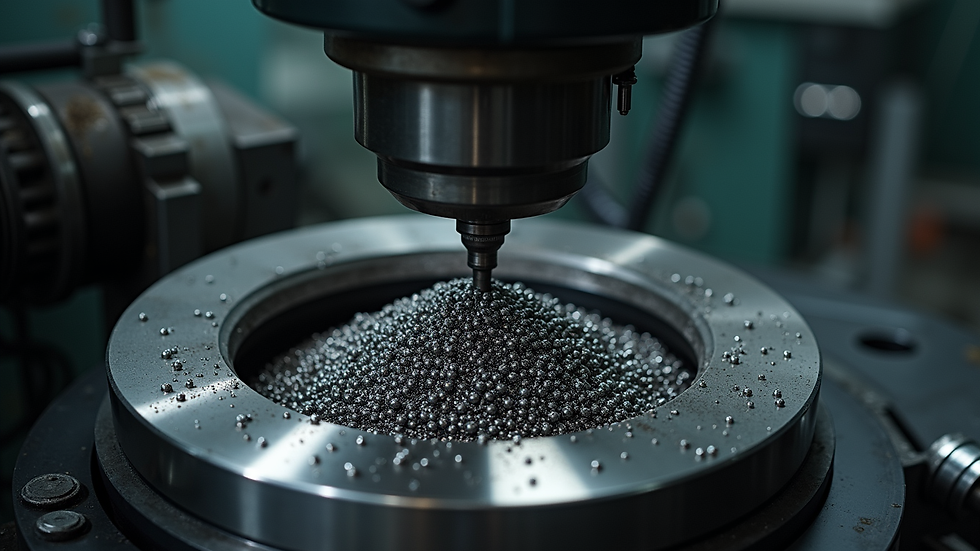
Creating custom steel balls involves several precise manufacturing steps. Each stage is critical to achieving the desired specifications and quality standards. The process typically includes:
Material Preparation: Raw steel is selected based on the required grade and chemical composition. It is then cut into smaller pieces suitable for ball formation.
Forming: The steel pieces are shaped into rough spheres using cold heading or forging techniques. This step establishes the basic ball shape.
Flashing: Excess material, known as flash, is removed by rolling the rough balls between two plates. This process improves roundness.
Heat Treatment: The balls undergo heat treatment to enhance hardness and mechanical properties. This may involve quenching in oil or water followed by tempering.
Grinding: Precision grinding machines refine the balls to exact diameters and tolerances. This step ensures uniformity and smoothness.
Lapping and Polishing: The balls are polished to achieve the required surface finish, reducing friction and wear in their applications.
Inspection: Each batch undergoes rigorous quality control checks, including dimensional measurements, hardness testing, and surface defect inspections.
Throughout these stages, maintaining strict process controls is essential. For instance, temperature regulation during heat treatment directly affects the steel ball’s hardness and durability. Similarly, grinding precision impacts the ball’s roundness and size consistency.
Material Selection and Its Impact on Performance
Choosing the right material is fundamental to the success of any custom steel ball design. Different steel grades offer varying properties that influence the ball’s strength, corrosion resistance, and wear characteristics.
Chrome Steel (AISI 52100): This is the most common material for precision steel balls. It offers high hardness, excellent wear resistance, and good fatigue life. Chrome steel balls are ideal for bearings and automotive applications.
Stainless Steel (AISI 440C): Known for its corrosion resistance, stainless steel is suitable for environments exposed to moisture or chemicals. It also maintains good hardness and strength.
Carbon Steel: While less expensive, carbon steel balls have lower corrosion resistance and are typically used in less demanding applications.
Specialty Alloys: For extreme conditions, such as high temperatures or corrosive environments, specialty alloys like Inconel or ceramic-coated steel balls may be employed.
The choice of material should align with the operational environment and mechanical requirements. For example, a steel ball used in a marine application must resist rust and corrosion, making stainless steel a preferred option. Conversely, high-speed machinery may benefit from the superior hardness of chrome steel.
Precision and Tolerance: Why They Matter
In many industrial applications, even the smallest deviation in steel ball size or roundness can lead to significant performance issues. Precision and tolerance are therefore critical parameters in custom steel ball manufacturing.
Diameter Tolerance: This refers to the allowable variation in the ball’s diameter. Tight tolerances ensure proper fit within bearings or assemblies, reducing vibration and wear.
Roundness: The degree to which the ball approximates a perfect sphere affects load distribution and friction. High roundness reduces stress concentrations and extends component life.
Surface Finish: A smooth surface minimizes friction and prevents premature wear. Surface roughness is often measured in microinches or micrometers.
Achieving these specifications requires advanced machinery and skilled operators. For example, grinding machines equipped with CNC controls can produce steel balls with tolerances as tight as ±0.0001 inches. Additionally, lapping processes can improve roundness to within a few millionths of an inch.
By prioritizing precision, manufacturers can deliver steel balls that enhance the reliability and efficiency of the final product.
Innovations in Custom Steel Ball Design
The field of steel ball manufacturing continues to evolve with technological advancements and material science breakthroughs. Innovations are enabling the creation of steel balls with enhanced properties and new functionalities.
One notable development is the integration of coatings and surface treatments that improve corrosion resistance, reduce friction, or provide self-lubricating properties. For instance, applying a thin layer of titanium nitride can increase hardness and wear resistance without significantly altering dimensions.
Another area of progress is the use of advanced heat treatment techniques, such as vacuum heat treatment, which minimizes oxidation and improves uniformity. This results in steel balls with superior mechanical properties and longer service life.
Furthermore, additive manufacturing or 3D printing is beginning to influence custom steel ball production. While still in early stages, this technology offers the potential for complex internal structures or composite materials that traditional methods cannot achieve.
These innovations reflect the ongoing commitment to meeting the diverse and demanding needs of industries relying on precision steel balls.
Practical Recommendations for Selecting Custom Steel Balls
When specifying custom steel balls for industrial applications, several practical steps can help ensure the best outcome:
Define Application Requirements Clearly: Understand the operating conditions, load types, speeds, and environmental factors.
Consult Material Experts: Work with metallurgists or suppliers to select the most suitable steel grade and treatments.
Specify Tolerances and Surface Finish: Provide detailed dimensional and surface quality requirements to avoid ambiguity.
Request Samples and Testing: Evaluate prototype steel balls under real-world conditions before full-scale production.
Consider Lifecycle Costs: Factor in maintenance, replacement frequency, and potential downtime when choosing materials and designs.
By following these guidelines, businesses can optimize their use of custom steel ball solutions, enhancing product performance and reducing operational risks.
Custom steel balls are indispensable components in many high-precision industries. Their design and manufacture require careful attention to material properties, dimensional accuracy, and surface quality. By embracing advanced manufacturing techniques and innovations, companies can develop steel balls that meet exacting standards and contribute to the success of complex machinery and systems.
For those interested in exploring tailored options, I recommend reviewing detailed specifications and collaborating closely with manufacturers specializing in custom steel ball design to achieve the best results. This approach ensures that the steel balls not only meet but exceed the demands of modern industrial applications.


Comments